
Wet filament: how to recognize and dry it safely
Bubbles, popping, rough surfaces or strings can indicate moisture; temperature, retraction or dirt can cause similar symptoms. Before buying a dryer, compare the same spool against a known profile and read the maker’s guidance.
Step-by-step diagnosis
- Check that the nozzle is clean and use the recommended profile.
- Save a sample of the defect and record temperature, speed and how long the spool has been open.
- Check drying time and temperature for that exact brand. Prusa publishes a material table, but its values are not universal for every spool.
- Check the spool’s heat tolerance and let air circulate as the dryer instructs.
Drying is not curing
No models match this combination. Try another material or color.
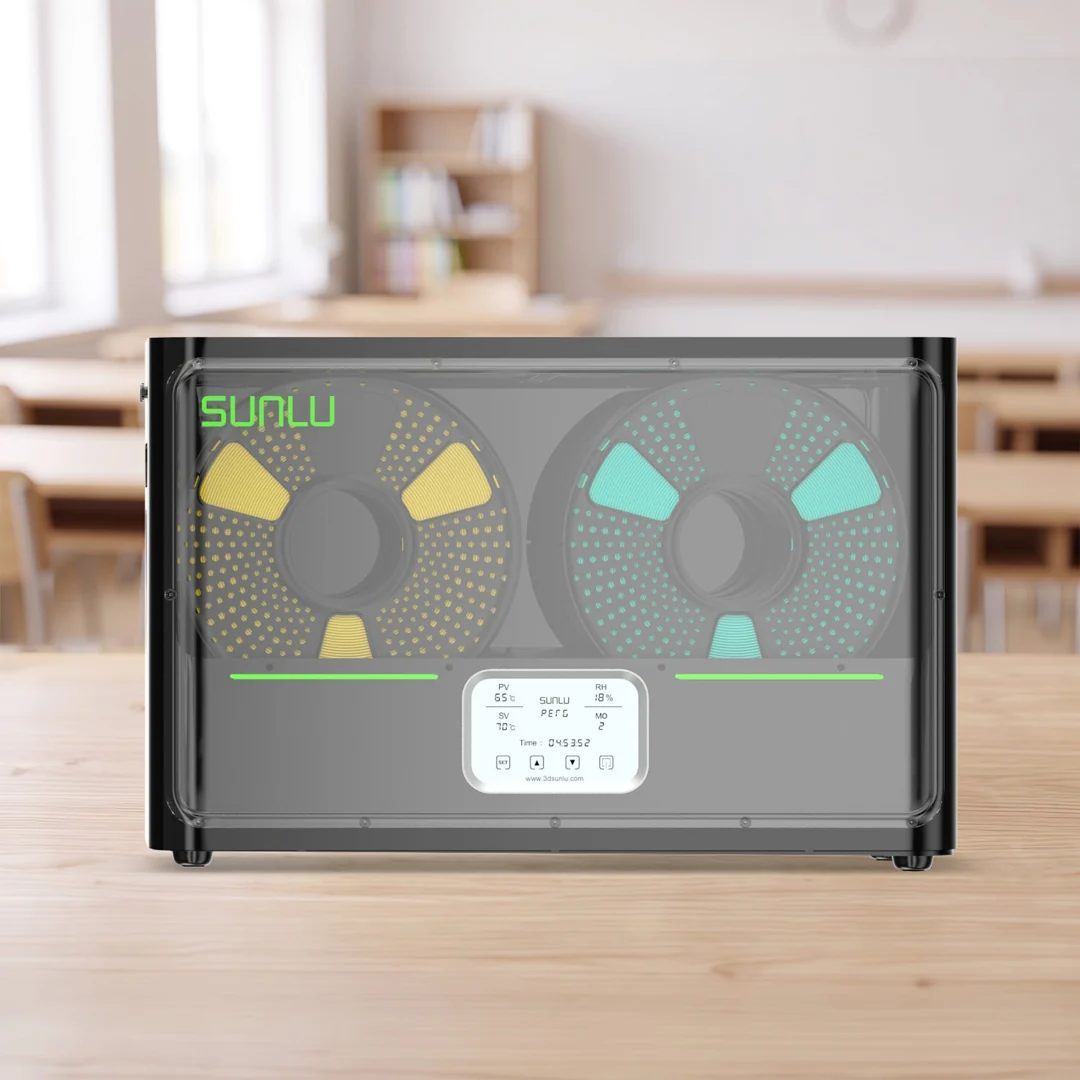
A heated dryer works on filament; a UV station works on resin parts. Afterwards, store the spool in a sealed container with desiccant.
Technical source: Prusa drying guidance.